




6763.77 PLN (including VAT)
Basic info
Course description
Valid medical certificate for BOSIET with CA-EBS:
-offshore medical certificate, OEUK/OGUK,
or
-seafarer medical certificate (MLC/ILO/STCW),
or
-diver medical certificate approved by AMED,
or
-fitness for In-Water Training (EBS) certificate issued by an OEUK-registered doctor.
Information for personnel planning to work on the Norwegian Continental Shelf:
From 1 April 2026, OPITO BOSIET + EBS (Code 5700) or FOET + EBS refresher training (Code 5858) is required. Depending on the requirements of the operator or place of work, additional Escape Chute training (Code 5770) may also be required.
Before booking a course, please confirm with your employer or operator that the training completed at Vulcan Training & Consultancy is accepted by them.
- Valid identity document
- Swimsuit or swimming trunks
- Flip-flops
- Towel
- Additional pair of socks
- T-shirt
The certificates are valid for 4 years. Before the expiration date, it is necessary to take the OPITO FOET with CA-EBS (Code 5850) + EBS (Rebreather) (Code 5858) course to keep the credentials valid.
This basic safety training in the offshore oil and gas industry provides knowledge and skills about potential workplace hazards, survival at sea, firefighting, and emergency procedures, including evacuation from a sinking helicopter.
Course intended for:
Personnel working or planning to work in the offshore oil and gas industry, for example on drilling rigs, production platforms, or other offshore installations.
Training objective:
The training introduces participants to safety systems used on offshore installations and provides them with the basic knowledge and skills required to respond effectively in emergency situations. It also covers safe helicopter transportation to and from offshore installations and the actions to be taken in the event of an emergency helicopter ditching.
Objectives of BOSIET with CA-EBS and/or EBS (Rebreather):
-
Identify the general hazards specific to offshore oil and gas installations, the potential risks associated with these hazards, and the control measures used to eliminate or reduce those risks.
-
Identify key safety regulations and requirements applicable to the offshore environment and explain the basic principles of safety management.
-
Demonstrate, in a simulated environment, the ability to use safety equipment and follow procedures when preparing for helicopter emergencies, with particular emphasis on escape from a helicopter following an emergency ditching.
-
Demonstrate sea survival techniques and basic first aid skills.
-
Demonstrate the ability to use basic firefighting equipment and apply self-rescue techniques in conditions of reduced visibility caused by smoke.
-
Become familiar with the correct use of the Compressed Air Emergency Breathing System (CA-EBS) and/or Emergency Breathing System (EBS – Rebreather), depending on the selected training option.
Description:
The course includes theoretical and practical training delivered through four main modules:
● Safety Induction – an introduction to the offshore environment, offshore oil and gas exploration and production activities, workplace hazard identification, and risk management principles.
● Helicopter Safety and Escape – helicopter transport safety procedures, emergency response, and escape from a helicopter following an emergency ditching, including helicopter inversion and complete submersion underwater.
● Sea Survival with First Aid – knowledge and practical skills related to individual sea survival techniques, life-saving actions, and first aid.
● Fire Fighting and Self Rescue – training in appropriate actions during a fire emergency, the use of basic firefighting equipment, and evacuation and self-rescue from areas with reduced visibility caused by smoke.
The course also includes practical training in the use of emergency breathing systems:
-
Compressed Air Emergency Breathing System (CA-EBS) – a system using compressed air,
-
Emergency Breathing System (EBS – Rebreather) – a rebreather-type emergency breathing system.
Available training options:
The course may be completed in one of the following configurations:
-
BOSIET with CA-EBS – training including the use of the Compressed Air Emergency Breathing System,
-
BOSIET with EBS (Rebreather) – training including the use of the Emergency Breathing System – Rebreather,
-
BOSIET with CA-EBS and EBS (Rebreather) – a combined option covering training and practical exercises with both emergency breathing systems.
When the combined option is completed, the participant fulfils the training requirements for both systems and receives two separate certificates, one for CA-EBS and one for EBS (Rebreather).
The appropriate training option should be selected based on the requirements of the operator, employer, and the geographical region in which the participant intends to work.
Course completion and certification:
Upon successful completion of the training, participants receive an OPITO-approved certificate or certificates, depending on the training option completed.
Please note that some companies, operators, or geographical regions may require specific or additional certification in order to meet their own competence requirements.
Vulcan Training strongly recommends checking the applicable training and certification requirements with the operator or employer before booking the course.
Vulcan Training can provide guidance on generally applicable certification requirements for particular geographical regions; however, additional requirements may apply in accordance with local regulations, operator requirements, or individual company procedures.
Upcoming dates
-
 HOTEL VULCANWe have our own accommodation base
Nasze Centrum szkoleniowe zlokalizowane jest w Szczecinie i razem z Hotelem Vulcan tworzy kompleks mogący zaproponować praktycznie nieograniczone możliwości współpracy.
Hotel zapewnia 110 miejsc noclegowych w wysokim standardzie - pokoje jedno i dwuosobowe. W hotelu znajduje się restauracja, w której zapewniamy śniadania, obiady oraz kolacje. Organizujemy również zbiorowy transport z lotniska w Berlinie i Goleniowa do naszego centrum. -
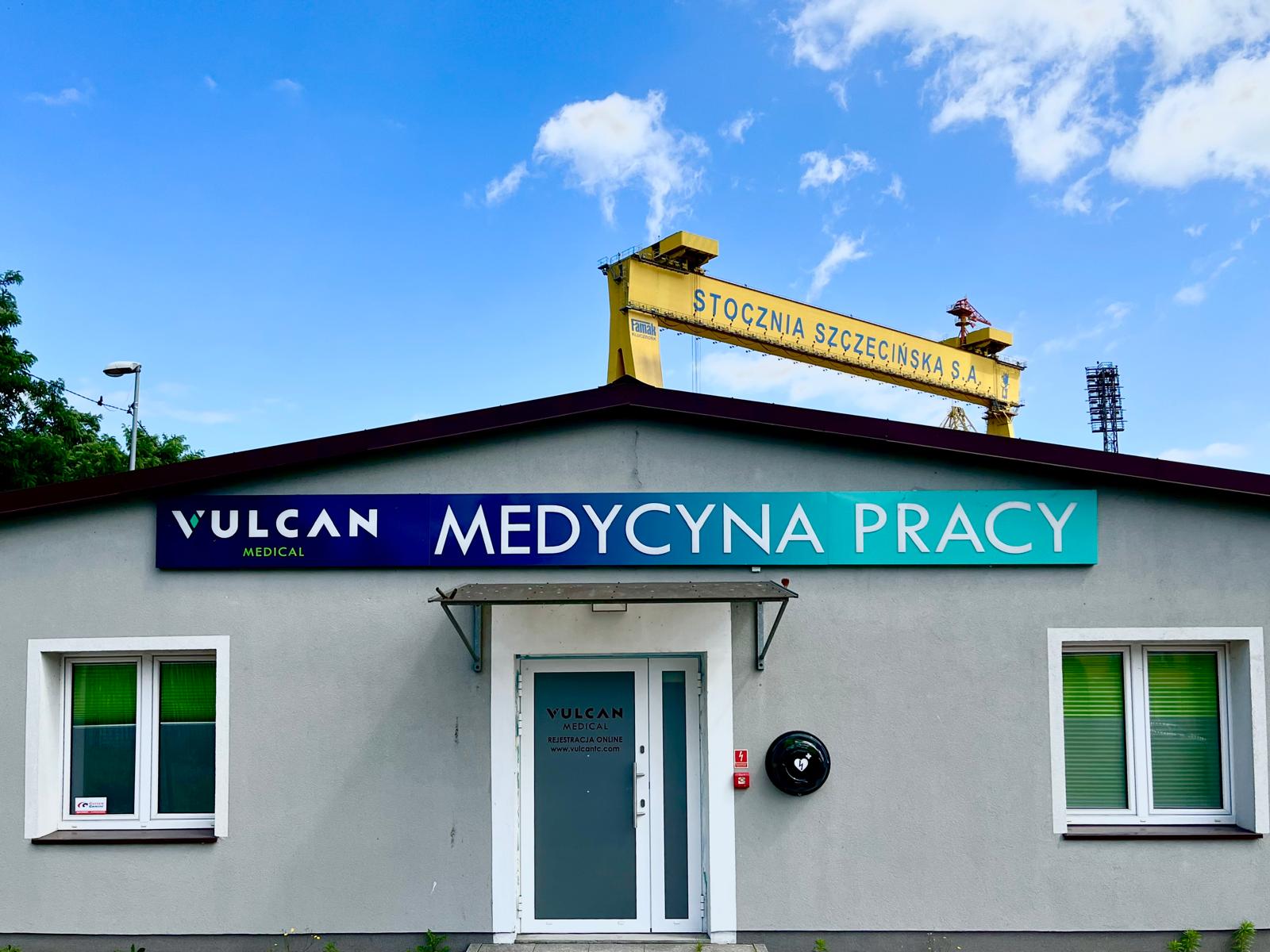 Vulcan MedicalOccupational Medicine Office
Occupational medicine conducted by our Center includes the prevention of occupational diseases for seafarers, wind turbine technicians, and other professions or specializations. The examinations will determine if the delegates have any health contraindications that would prevent them from performing tasks in a specified position.